Introduction
Annually on the 7th April global communities mark the World Health Day, an initiative sponsored by the World Health Organisation (WHO) to highlight pressing health challenges and attempt to mobilise collective actions.
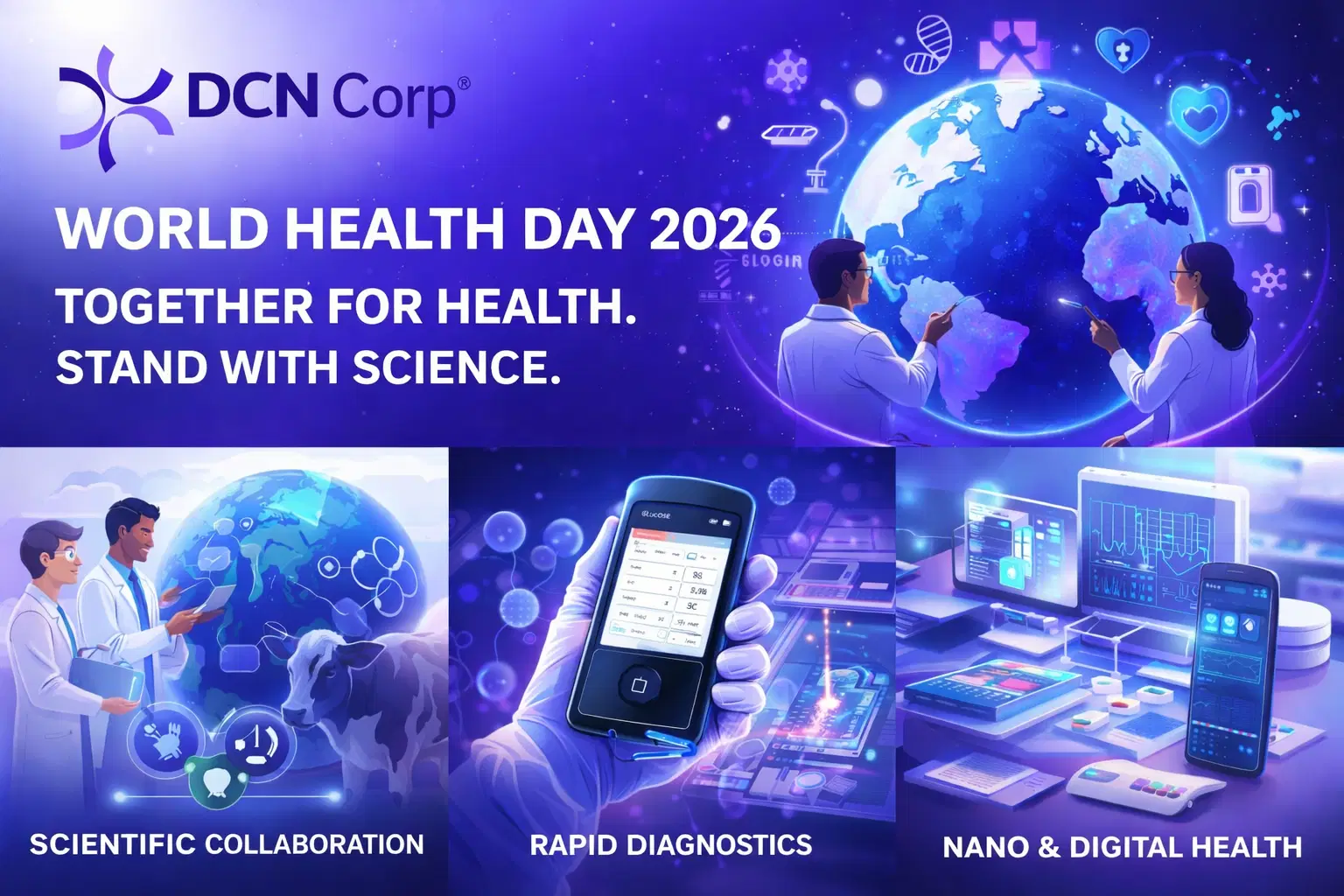
In 2026, the theme is “Together for Health. Stand with Science”, which ultimately emphasises a critical truth: proactive and positive scientific innovation and collaboration are central to solving today’s most complex health challenges.
For organisations wishing to operate at the intersection of Nanotechnology, diagnostics, and advancing biosensing, this overarching message is particularly relevant.
Why World Health Day Matters More Than Ever
World Health Day is not simply symbolic, but it reflects systemic global challenges:
Despite progression in different diagnosis methodologies and technologies, millions worldwide still lack access to essential healthcare services and/or products, which unfortunately, only reinforces the urgency for innovation and equitable deployment.
The 2026 Theme: Science as the Backbone of Global Health
“Together for Health. Stand with Science”
This year’s campaign highlights three core pillars:
1). Scientific & Industrial Collaboration
Global health challenges are increasingly interdisciplinary. Therefore, the 2026 campaign promotes collaboration across disciplines of:
This directly aligns with the One Health framework, which recognises the interconnected health of people, animals, and eco-systems.
2). Evidence-based Action
Scientific discovery along is insufficient, and indeed the real impact lies in:
For example, present and future advances in biosensing and nanomaterials will enable:
3). Global Accessibility and Equity
It is increasingly articulated that healthcare innovations must be:
These objectives align with the broader global drive of universal health coverage, ensuring individuals receive care without financial hardship.
The Role of Advanced Diagnostics in Modern Healthcare
At DCN Corp®, the relevance of the World Health Day lies within its core innovation philosophy:
How can we accelerate diagnostics to help improve outcomes at scale?
Nascent and emerging technologies are reshaping healthcare delivery in multiple modes:
🔬 Nanotechnology-driven Sensing
⚡ Rapid Point-of-Care Testing
🌐 Digital & Connected Health
All the innovations above directly align with the 2026 theme by helping translate science into actionable healthcare solutions.
From Awareness to Action: What Needs to Happen Next?
The annual World Health Day is ultimately a call to action:
For Industry & Emerging Innovators
For Policy makers
For the Scientific communities
DCN Corp® Perspective: Diagnostics at the Speed of Life
At DCN Corp®, we aim to utilise the emphasise of the World Health Day 2026 as a reinforcement of our core innovation principle:
The future of Healthcare depends on Faster, More precise, and More accessible diagnostics
Be leveraging:
As we move closer to a world where:
Conclusion
World Health Day 2026 highlights a simple but pragmatic message:
Science & Engineering isn’t optional – indeed it is Foundational to Global health
From future pandemic preparedness to chronic disease management systems, the ability to accurately detect, monitor, and efficiently respond is very much dependent on present and future scientific innovations and collaborations.
Therefore, for organisations like DCN Corp®, this is both an opportunity to continue and a responsibility – to help ensure that cutting-edge science translates into real-world healthcare impacts.