Annually on the 14th June is World Blood Donor Day, which recognises the extraordinary contribution of volunteer blood donors worldwide.
The 2026 campaign theme is “One Drop of Humanity. Give Blood. Save Lives.“, which is organised by the World Health Organisation (WHO). This year’s motto highlights the profound impact that a single donation can have on patients, families, and healthcare systems and tools worldwide.
Regular blood donations remains one of the most powerful acts of human generosity and solidarity.
A single donation can support emergency medicine, surgical procedures, cancer treatment, maternal healthcare, trauma response, and the management of chronic medical conditions. Because behind every donated pint of blood is a simple but remarkable reality:
Blood Helps Save Lives
Yet blood is more than a life-saving resource. In fact, increasingly blood is becoming one of the most valuable resources of clinical information available to modern medicine.
From Blood Donation to Early Disease Detection
DCN Corp® thinks healthcare locally and globally is undergoing a fundamental transformation.
Historically and academically blood testing has focused on diagnosing a disease and/or condition only after the symptoms have emerged. However, today, with continual advances in biosensing, molecular diagnostics, Nanotechnology, and Machine Learning (ML) as well as Artificial Intelligence (AI) are enabling healthcare systems and tools to move towards earlier detection, continuous and real-time monitoring, and most importantly preventative intervention.
Uniquely within a single blood sample exists an extraordinary amount of biological information such as:
The challenge is no longer whether these signals in fact exist.
Instead, the challenge is detecting them accurately, rapidly, and an increasingly lower concentrations.
The Importance of Sensitivity
Unfortunately, many diseases and/or conditions begin long before the symptoms appear.
Cancer, cardiovascular disease, neurodegenerative disorders, and infectious diseases often generate subtle biological signals at extremely low concentrations during their earliest stages.
Detecting these signals requires technologies and tools that are capable of measuring trace quantities with high sensitivity, speed, specificity and reproducibility. And this is where next-gen sensing platform technologies are becoming increasingly important.
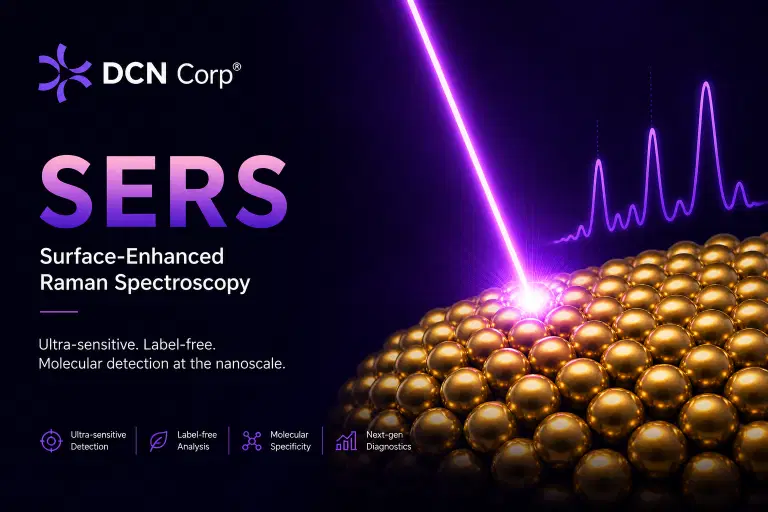
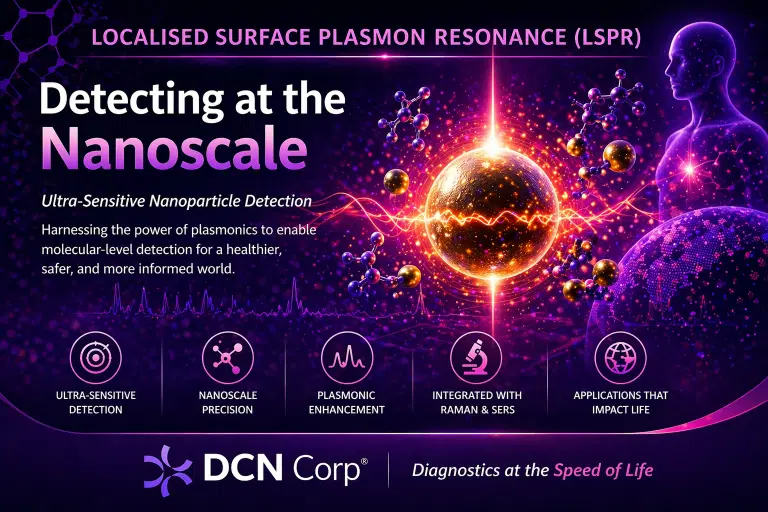
Continual innovations in plasmonics, nanomaterials, Surface Plasmon Resonance (SPR), Localised Surface Plasmon Resonance (LSPR), Surface-Enhanced Raman Spectroscopy (SERS), and advanced optical sensing systems and tools are expanding the limits of what can be detected from small chemical/biological samples.
One Drop = Multiple Possibilities
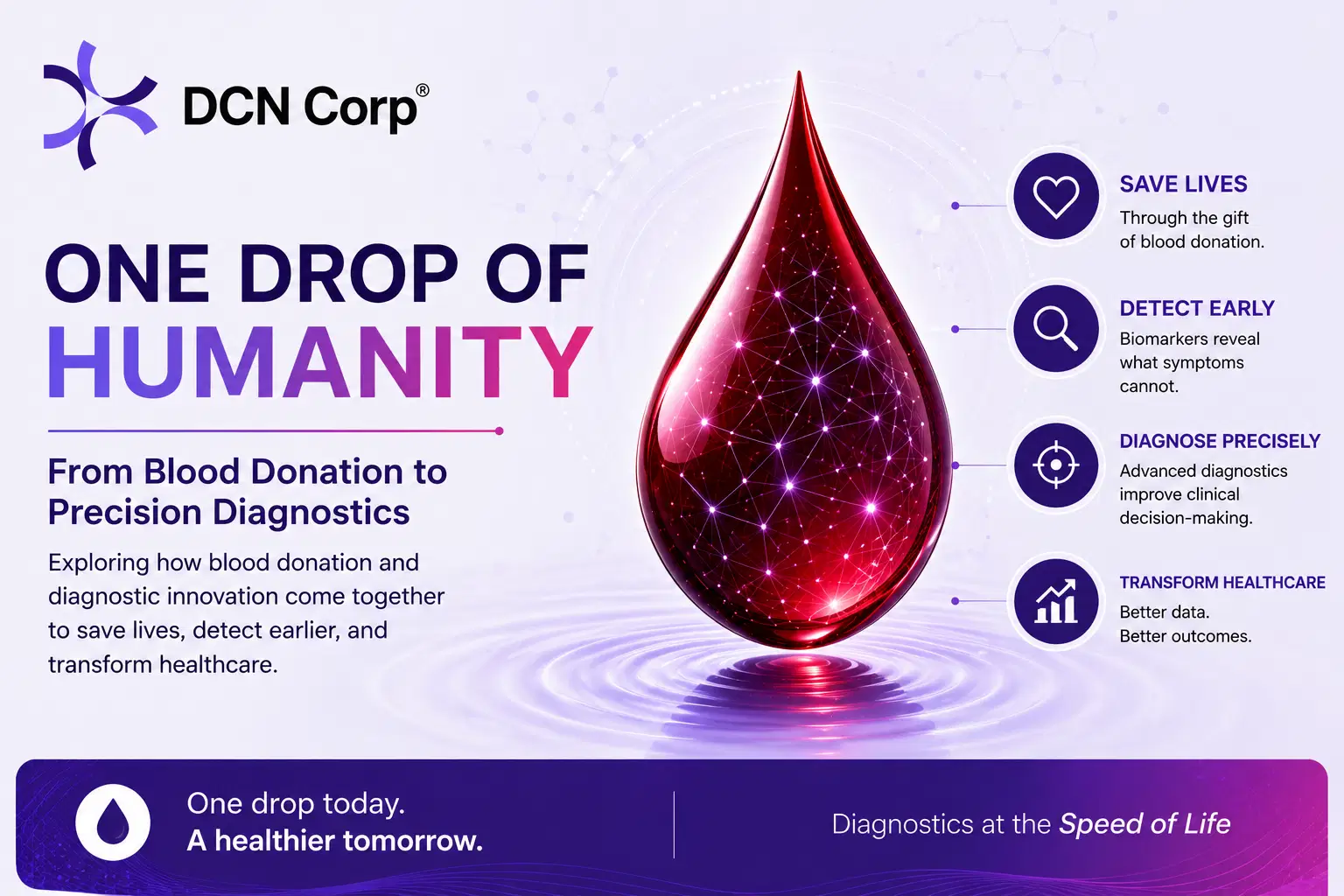
The World Blood Donor Day 2026 theme reflects an important truth, which is that a single drop of blood can save a life through donations. Plus a single drop of blood may also help reveal critical information about human health.
As diagnostic technologies continue to advance, the same chemical/biological samples that supports lifesaving transfusions may increasingly contribute to earlier diagnosis, personalised medicine, treatment monitoring, and improved disease management systems and tools.
The future of healthcare will depend not only on access to blood, but also on our ability to understand the information it contains.
Looking Forward
At DCN Corp® we truly believe that the future of diagnostics lies in making healthcare affordable, faster, more sensitive, and more accessible.
The emergence of sensing platform technologies have the potential to transform how diseases and/or conditions are detected, monitored, and managed, thus, positively moving healthcare closer to a future where earlier intervention becomes the norm rather than the exception.
On World Blood Donor Day 2026 we join the global community in recognising the generosity of blood donors everywhere.
Every blood donor contribution reminds us that sometimes the most powerful advances in healthcare begins with something remarkably small:
One Drop of Humanity
Please note this blog has been published in support of the World Blood Donor Day, and it is intended for educational and informational purposes only and does not constitute medical opinion nor advice.