Introduction
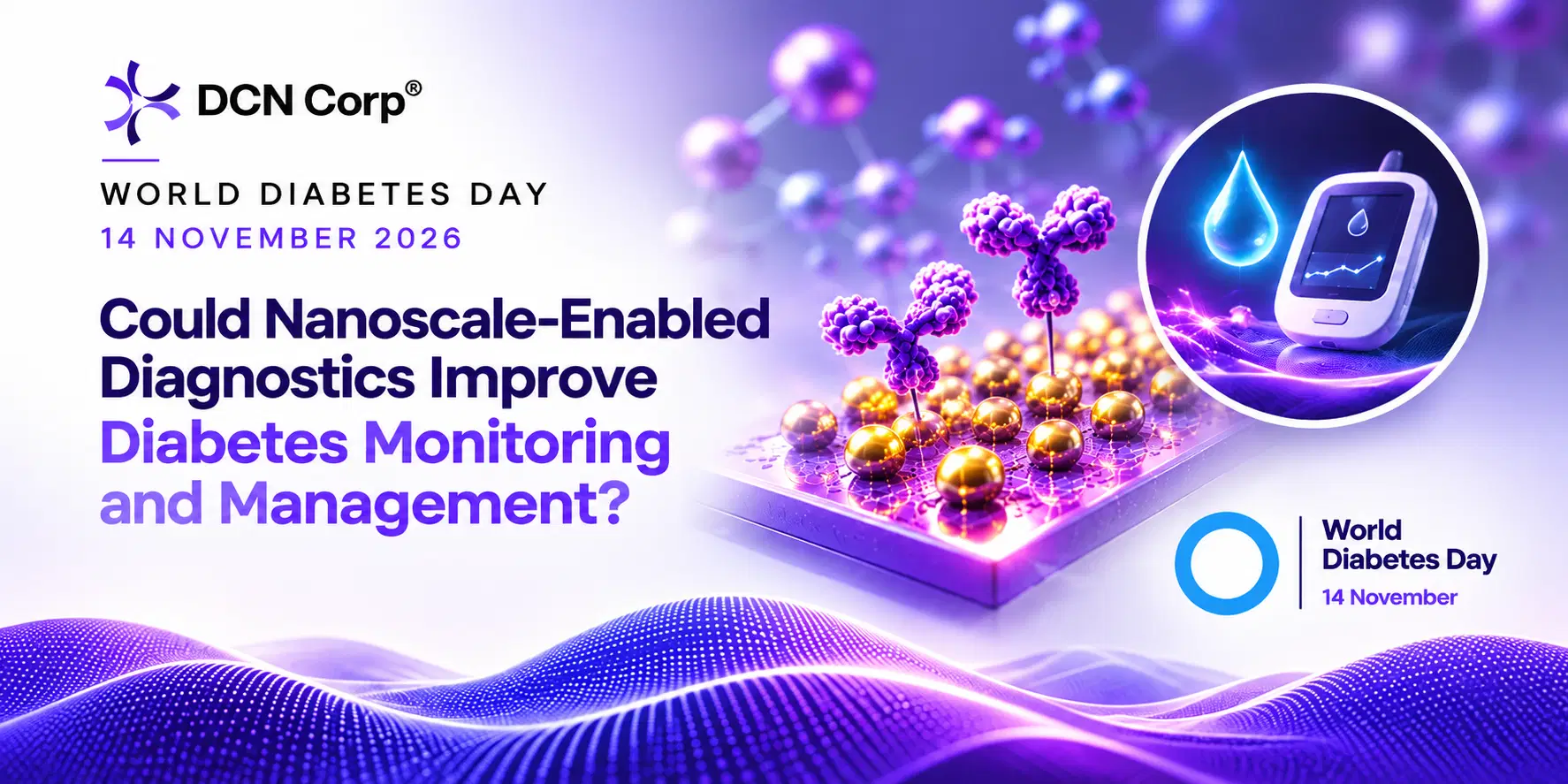
Annually on 14th November is World Diabetes Day which draws attention to one of the world’s most significant and growing public health challenges.
Unfortunately, diabetes affects hundreds of millions of people worldwide. Beyond its prevalence it is a condition that often requires continuous attention to blood glucose levels, treatment, lifestyle and the prevention of long-term complications.
For people living with diabetes, monitoring and management is not simply a laboratory procedure. It can be an essential part of everyday life. Decisions about food, physical activity, medication and treatment may depend upon obtaining accurate data/information in relation to changing glucose concentrations.
For healthcare professionals having easy access to reliable measurements is equally important when evaluating treatment effectiveness, identifying potential complications and supporting long-term disease management.
This raises an important question for diagnostic inventors/innovators:
Could advances in nano-scale materials and bio-sensing technologies help make diabetes monitoring more accurate, accessible and informative?
At DCN Corp® this question connects with our wider interest in Nanotechnology, plasmonics, surface engineering and the development of advanced bio-sensing platform technologies.
However, understanding this opportunity window requires recognising both the achievements of existing diabetes monitoring technologies and the scientific challenges that emerging technologies must overcome.
Understanding the Global Diabetes Challenge
Diabetes is a chronic metabolic condition characterised by elevated blood glucose concentrations. It develops when the body cannot produce sufficient insulin, cannot use insulin effectively, or both.
The two principal forms are as follows:
Other forms include gestational diabetes, which develops during pregnancy and diabetes associated with particular genetic conditions, diseases or medications.
According to the World Health Organisation (WHO) approximately 830 million people were living with diabetes in 2022 which represents a substantial increase over previous decades.
Diabetes can contribute to serious complications involving the cardiovascular system, kidneys, eyes and peripheral nerves. Yet the consequences of diabetes are not determined by glucose measurements alone.
Accessibility to diagnosis, appropriate treatment pathways, education, regular monitoring and long-term clinical support all influence outcomes. This is why improvements in diabetes management must be considered within the wider healthcare systems.
Why Accurate Glucose Monitoring Matters
Routine glucose monitoring is a fundamental component of diabetes management, especially for people using insulin or treatments that can cause hypoglyceamia.
Typically blood glucose concentrations can change throughout the day as a direct response to a balanced diet, regular physical activity, medication, illness, stress and other physiological factors.
That is why regular measurements can help patients and their healthcare professionals understand these changes and make well considered treatment decisions. However, inaccurate and/or misleading results can have consequences.
For instance, a false reading could lead to inappropriate treatment decisions. Additionally a false low reading could also prompt unnecessary intervention or obscure the person’s actual glucose status.
For patients and their families that rely on glucose measurements to guide insulin administration; measurement reliability is very important. Consequently, this illustrates a principle well beyond diabetes:
A diagnostic measurement is only valuable when its accuracy and limitations are properly understood
For diabetes monitoring and management, the science and engineering challenge is therefore not simply to detect glucose. It is to measure glucose concentrations reliably across clinically relevant ranges and changing physiological conditions.
Conventional Testing towards Continuous Glucose Monitoring (CGM)
The ability to monitor diabetes has evolved considerably over the decades.
Blood glucose meters/monitors employ disposable test strips, which are based on electro-chemical sensing principles to help measure glucose from a small blood sample. These systems and tools remain important for many people living with diabetes.
Continuous glucose monitoring (CGM) technologies have introduced an alternative approach. CGM systems and tools use sensors that help estimate glucose concentrations within interstitial fluid thus, providing a methodology for repeated measurements and information about glucose trends.
Dependent on the system and tool used, they may provide alerts when glucose concentrations approach or exceed defined thresholds. This type of system and tool can offer advantages over isolated measurements, because glucose concentrations are dynamic. A singular measurement provides data/information about one point in time. Whereas a series of measurements provide data/information about the direction, rate of change and patterns, respectively.
Unfortunately, CGM technologies also have limitations. Interstitial glucose concentrations may lag behind blood glucose concentrations, especially when there are rapid changes. Bio-sensory accuracy can vary across conditions, and users may occasionally need an alternative measurement when readings/signals do not match symptoms or expectations.
The development of CGM demonstrates how advances in bio-sensor engineering, electronics, algorithms and data interpretation can influence diabetes management.
Why Nano-scale Materials & Matrices Interesting for Bio-sensing
Nanotechnology involves the manipulation and engineering of materials and matrices at dimensions where their physical, chemical and optical properties are markedly different from those observed at larger scales. Additionally for bio-sensing applications nano-scale structures can provide several potentially useful characteristics, which include increased surface area to volume ratios, tunable optical signals, distinctive electrical properties and multiple opportunities to engineer interactions between biomolecules and sensory surfaces.
For instance, nanostructured surface architectures may provide opportunities to improve interactions between target biomolecules and sensing elements. However, please note that an increased surface area or enhanced optical response does not automatically translate into a better clinical bio-sensor.
As articulated in LinkedIn articles performance metrics of a diagnostic platform technology is dependent on multiple factors including materials used, surface chemistry, bio-sensing mechanism, sample environment and signal processing methods.
Consequently for diabetes monitoring the factors mentioned above are especially important because glucose concentrations can vary considerably over time. Therefore, a commercially viable bio-sensor must provide dependable measurements across its intended ranges rather than demonstrate detection at minute concentrations.
Plasmonic & Emergent Optical Bio-sensing Techniques & Technologies
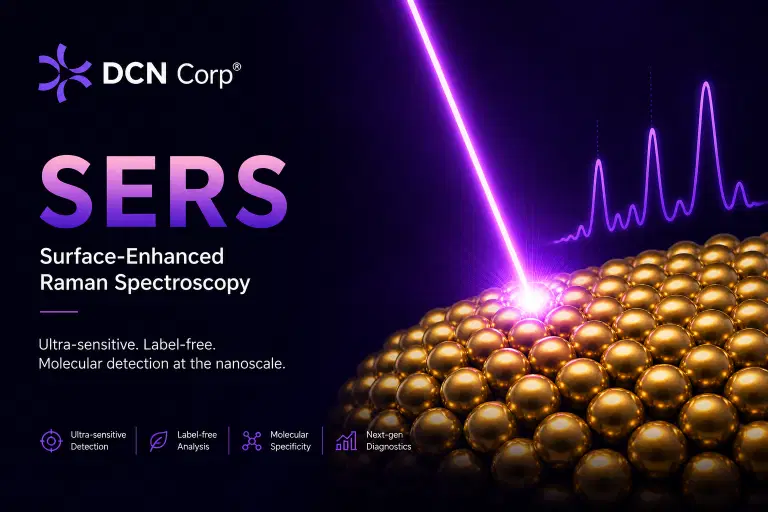
An area of continued interest within nano-scale engineering, bio-sensing and the general public is the interaction between light and metallic nanoparticles (NP). NP support collective oscillations of conduction electrons when illuminated by electro-magnetic radiation.
These known phenomena underpin several plasmonic bio-sensing techniques/technologies:
Researchers and innovators have investigated extensively the techniques above, and their derivative optical techniques for adaption into glucose bio-sensing systems and tools and other biomedical applications.
However, their practical suitability for routine diabetes monitoring remains dependent upon application-specific analytical performance, selectivity, stability, reproducibility and clinical validation.
An emerging optical sensing technique should not be assumed to outperform established electrochemical glucose-monitoring technologies simply because it uses nanotechnology.
The question is whether it can provide a meaningful advantage for a clearly defined healthcare application.